Custom Kitting Solutions
Read Case Study
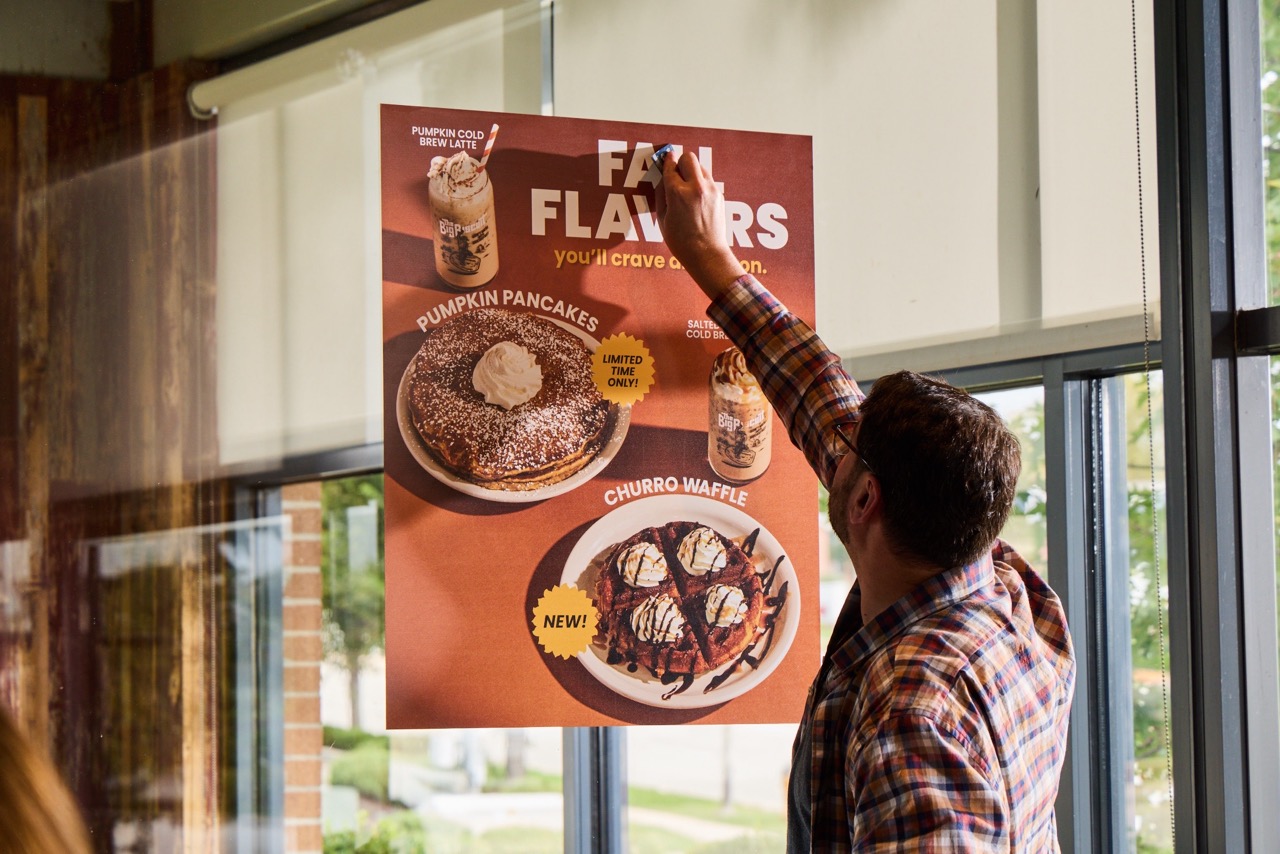
A window cling is a printed graphic designed to adhere to glass without permanent adhesive. The term gets used loosely in the restaurant industry, often interchangeably with “decal” and “static cling,” but these are three distinct products with different adhesion methods, durability profiles, and best-use scenarios.
For multi-location restaurant brands that cycle through seasonal promotions, LTO launches, and branded storefront signage, choosing the right format affects how long the graphic holds, how cleanly it removes, and how much labor each location spends on swaps.
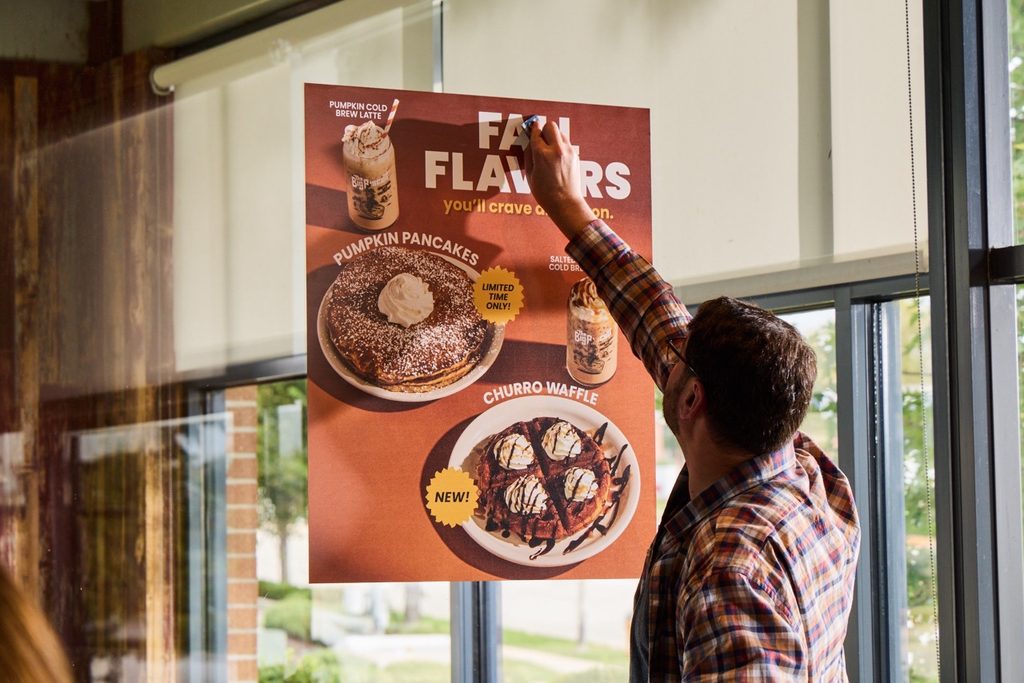
Each format gets its grip a different way, and that one distinction drives everything else: performance, removal, reuse.
A static cling holds on with electrostatic charge alone. No adhesive on the material at all. The film grips smooth surfaces the way a rubbed balloon sticks to a wall. Static clings are thin, light, and the easiest of the three to put up and take down. They also give up the fastest. Temperature swings, humidity, and vibration can knock them loose or send them sliding, and exterior glass makes all of that worse.
A decal is vinyl with adhesive on the back, rated permanent or semi-permanent. That makes it the durable option: it shrugs off outdoor exposure and direct sun. The catch is what happens at removal. Peeling a vinyl decal off glass often leaves residue behind, and getting that off takes solvent or a razor blade. Multiply that by every location, every swap.
A window cling with a light adhesive layer sits between the two. It sticks more reliably than static alone but removes cleanly without residue. This is the format most commercial printers produce for restaurant applications because it balances hold strength with easy swaps. Custom window clings can be printed on clear or white stock, single-sided or double-sided, and sized to fit specific window dimensions.
Don’t judge durability by maximum hold time. Judge it against a real promotional cycle, which in this industry runs four to eight weeks.
Static clings do fine on short indoor jobs. A countertop display or an interior glass partition can run on static alone. Exterior storefront glass is another story. Sun heats the glass unevenly, condensation forms overnight, and the charge weakens. A cling that looked perfect on installation day can be curling at the corners or sliding down the pane within a week or two.
Permanent decals will hold as long as you want. But a restaurant rotating LTOs, seasonal messaging, or holiday graphics doesn’t need forever. It needs a solid hold through a defined window and a clean exit after. A decal that takes 15 minutes of scraping at each location isn’t winning anything when the rollout covers 80 stores.
Light-adhesive window clings hold through a standard promotional cycle, inside or outside, and peel off clean when the promotion ends. For most multi-location restaurant brands, that’s the practical answer.
Adhesion decides whether a graphic survives removal well enough to be used again, which matters most for brands that rerun the same seasonal promotions across a fleet of locations.
Static clings are technically the most reusable: there’s no adhesive to wear out. In practice, dust settles on the cling surface and each reuse grips a little less. One stored between holiday seasons won’t stick the way it did unless someone cleans it carefully before putting it back up.
Adhesive decals are one-and-done. The adhesive bonds to the glass on first application, and taking the decal off damages both the adhesive layer and, usually, the printed face. Nobody designed these to be peeled, stored, and reapplied.
Light-adhesive clings can survive a few cycles if they’re stored flat between uses. The adhesive stays tacky through two or three applications. For a brand rerunning the same annual promotions, that can shrink reorder volume. For a brand running something new every cycle, first-application performance matters far more than reuse.
The decision comes down to three variables: how long the graphic needs to stay up, whether it will face interior or exterior conditions, and how often locations will swap it.
For permanent branding that will stay on the glass for months or years, such as a logo or hours of operation, a vinyl decal makes sense. For a one-time interior display lasting a few days, a static cling can work. For everything in between, which covers the majority of restaurant promotional signage, a light-adhesive window cling is the most practical choice.
Multi-location brands should also consider print specifications when ordering. Double-sided printing allows the graphic to be read from outside the glass while looking clean from inside the restaurant. Clear stock lets the window cling blend with the glass rather than blocking the view. Both options are standard in commercial restaurant signage production.
What’s the difference between a clear and a perforated window cling?
A clear window cling is fully see-through and printed directly on transparent film, best for logos or seasonal promotions. A perforated window cling uses a dotted film that lets people see out from inside while displaying a printed image from outside, common on storefront windows and doors.
Can window clings be printed double-sided?
Yes. A double-sided cling carries one design facing the dining room and a completely separate design facing the street. Useful when a location wants an outward-facing promotion on the same window space as an inward-facing menu or seasonal message.
Can window clings be ordered on a print-on-demand basis across multiple locations?
Yes. With print-on-demand ordering, individual locations request updated clings as promotions or seasonal designs change. The brand doesn’t have to forecast and print a large batch upfront for every location at once.
If you are planning a promotional rollout across multiple locations and need help determining the right format and specifications, schedule a consultation with Trabon’s print team.