Custom Kitting Solutions
Read Case Study
Laminated and synthetic menus are the two workhorse formats for water-resistant dine-in menus. Both are built to survive spills, handling, and daily wiping. What they don’t share is how they’re built, how they fail, or what they cost over a full year of use.
Which one makes sense has less to do with the material itself than with your operation. How many hands touch a menu in a day. What your staff cleans it with. How often pricing or offerings change. And what a guest concludes when they pick it up. This post walks through how each format performs under real conditions and which environments favor which. For a closer look at lamination options specifically, see Trabon’s guide to laminated menu types.
The durability gap between the two formats comes down to what a menu faces each shift: how often it gets handled, what chemicals hit it, how much spill exposure it takes, and how hard staff wipe it between seatings.
Laminated menus sandwich the printed sheet between layers of film. The ink sits underneath, out of reach of hands, food, and cleaning solution. That arrangement is why laminated menus handle aggressive sanitation so well. Alcohol-based cleaners and EPA-approved disinfectants can be wiped across the surface hundreds of times without ever touching the ink. The film takes the abuse. The print never sees it.
Synthetic menus print directly onto plastic. The substrate resists tears and water, but the ink sits on top of the surface with nothing shielding it. Strong cleaning agents wear it down over time. UV coating buys time and nothing more. In a high-sanitation operation, where every menu gets wiped with commercial-grade cleaner after every table turn, fading and smudging can show within weeks.
Each format fails in its own way. Laminated menus fail at the edges. Moisture slips in through unsealed edges or through nicks and cuts in the film, then works between the layers until the laminate peels or bubbles. Edge-seal construction cuts this risk significantly. Flush-cut leaves the edges wide open. Synthetic menus fail at the surface. The plastic holds together fine; it’s the printed content that breaks down under chemical exposure and handling friction. The menu stays intact. The information on it doesn’t.
High table turnover plus aggressive cleaning is where laminated, edge-sealed menus earn their keep. Lighter handling and gentler cleaning let synthetic deliver comparable durability at a different price point.
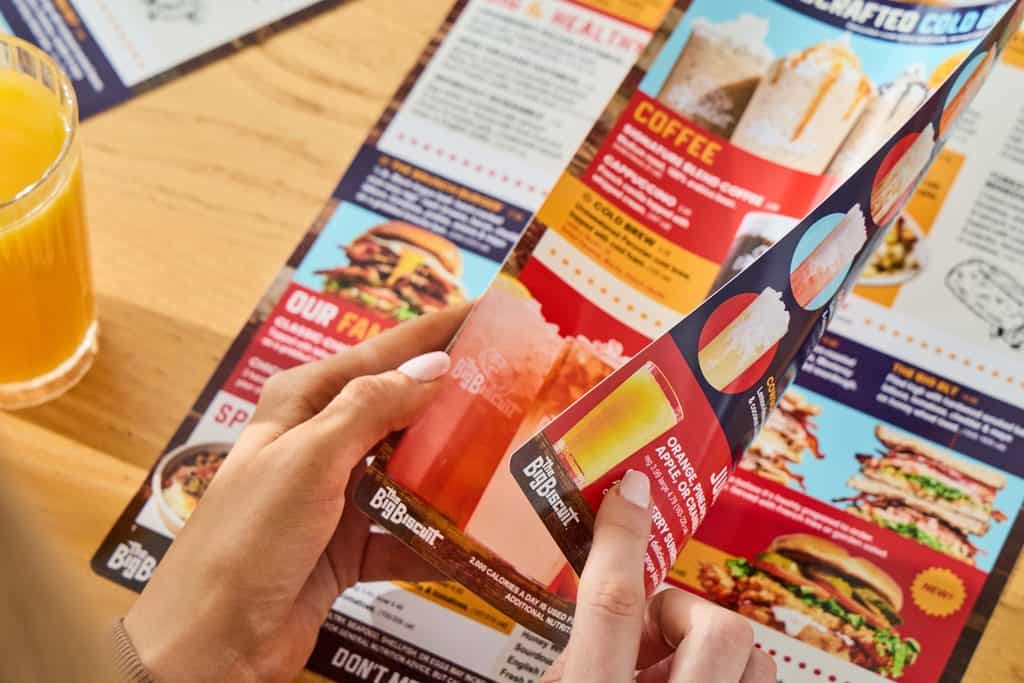
Per-unit price tells you what the purchase order said. Annual cost tells you what the menu really costs, and that figure has to include replacement frequency, reprint triggers, and waste.
Laminated menus usually cost more per unit. The lamination step adds material and production time, and an edge-sealed laminated menu is typically the most expensive single unit in a menu program. Here’s the offset: in a well-run restaurant, a laminated menu runs six months to a year before it needs replacing. Fewer reprint cycles in a year compresses that annual cost.
Synthetic menus come in cheaper per unit. The substrate costs less to produce, and there’s no lamination step. But run the calendar. If the cleaning protocol degrades the ink in two to three months, the brand is ordering replacements three or four times a year instead of once or twice. The lower unit price gets multiplied by a much higher replacement rate, and the annual total can pass what lamination would have run.
The third variable is how fast your content moves. A brand updating pricing, seasonal items, or LTOs quarterly is reprinting no matter what condition the old menus are in. Lifespan stops mattering because the menu gets replaced for content reasons, not durability reasons. Brands in that position often do better with synthetic: the menu gets swapped out before ink degradation ever shows. Brands with stable menus that hold six months or longer extract real value from the lamination investment.
One caution: run the fully loaded annual number. Per-unit price times reprint cycles, plus shipping, plus the staff time each reorder eats. A printing partner should be able to build that model for both options from your actual reprint history.
There’s no universal answer here. The right substrate follows your service style, how guests handle the menu, cleaning intensity, and update frequency.
High-turnover casual dining and family restaurants put menus through the hardest use anywhere. Multiple guests per hour. Drinks and sauces. Strong disinfectant after every seating. Kids’ menus get it worst. This is laminated, edge-sealed territory: the film protects both the ink and the paper from chemical exposure and constant handling.
Bars and brewpubs wear menus differently. Single-page or bi-fold pieces, handled in low light, meeting condensation from glassware more often than food. Cleaning intensity varies by bar. Synthetic performs well here when the protocol sticks to milder solutions, and the tear resistance pays off anywhere menus get folded, rolled, or jammed into holders.
Fine dining weighs the menu as part of the experience itself. Stock feel, finish, weight all feed brand perception. Soft-touch or matte lamination dominates this segment because synthetic substrates can’t quite replicate that premium feel. Menu changes tend to run seasonal there too, which lines up with lamination’s longer lifespan. For a breakdown of finish options, see Trabon’s guide to laminated menu types.
Quick-service and fast-casual concepts mostly sidestep the question entirely: disposable menus, menu boards, or digital displays. When they do print a durable dine-in piece, it’s usually simplified and changes often on LTO and promo cycles. Synthetic fits that rhythm because content turnover outruns durability concerns. The choice becomes cost per cycle, not durability. And for brands evaluating menu printing options across a portfolio, the right format can vary by concept even within the same multi-unit brand.
Moisture between the film and the printed sheet. It usually starts at the edges, especially on flush-cut pieces where the film doesn’t wrap around to seal the paper’s edge. Nicks, cuts, or cracks anywhere in the laminate let moisture in the same way. Edge-seal construction bonds the film around all edges of the menu, which sharply reduces the risk of delamination from moisture exposure.
Often, yes. When pricing, seasonal items, or promotional sections change quarterly or faster, the menu gets replaced before the ink degradation that affects synthetic stock under heavy cleaning ever becomes visible. In that rhythm, synthetic’s lower per-unit cost can beat paying for lamination that outlives the content cycle. The real question is whether your menus die of wear or of obsolescence.
Yes. Coated paper stock resists moderate spills at a lower cost, though it won’t hold up to repeated cleaning or heavy handling. Disposable menus duck the durability question completely by treating each menu as single-use. Which route makes sense still comes back to handling environment, update frequency, and what the menu contributes to the brand experience.