Custom Kitting Solutions
Read Case Study
When your restaurant had one location and a smaller team, managing menu updates manually may have felt doable. A weekly email with the schedule, a quick change to the specials board, and a few printed updates behind the counter could get the job done. But keeping that kind of process is risky as your business grows. Once you’re managing multiple promotions, different regions, varying price points, and more people across more stores, manual updates become a nightmare.
That is where stronger menu management software is worth the investment. Trabon helps multi-location restaurant brands move away from disconnected files and misaligned updates by giving teams a centralized way to manage menu changes. If your current process is starting to show cracks, it may be time to talk with Trabon about a smarter approach to restaurant menu management.
When different stores, teams, or vendors are all working from different files or timelines, it becomes much easier for the wrong menu version to end up live.
Growth is good — but it also raises the stakes. As more people start showing up for your food and your restaurants reach new neighborhoods, it becomes even more important for every team to stay on the same page. Guests expect the same prices, specials, and overall experience no matter which location they visit. Even growing from one location to three or five can be a world of difference, especially when different managers and markets start getting involved.
Let’s say you stick with manual updates. As more locations, managers, and regional differences enter the picture, mistakes become much harder to avoid. Small inconsistencies that were once easy to catch can start spreading from one store to the next before anyone realizes there’s a problem. You’re going to create confusion for staff, frustration for customers, and extra work for everyone trying to fix mistakes after the fact. It’s a lose, lose, lose scenario.
A restaurant menu management system helps turn that into a win, win, win. Instead of chasing emails and double-checking spreadsheets, teams can manage updates from one central place and push approved changes out confidently and efficiently. Customers know what to expect and anticipate when it comes to promotions. And there won’t be anyone forced to work late to update the menu boards.
Manual workflows create too many chances for something to go wrong. When updates are passed along through email chains, saved under different file names, or entered location by location, it gets harder to tell which version is actually current. That’s when wrong prices, outdated specials, and mismatched menu descriptions start slipping through.
Menu management software fixes a lot of those common issues by giving teams one place to manage approved updates. Instead of wondering whether they’re changing the right file or posting the wrong version, staff can feel more confident that the menu they’re working from is the correct one. That’s a huge relief for restaurant teams, and it helps them avoid the kind of mistakes that can lead to frustrated guests and awkward conversations at the counter.
Menu engineering is the process of designing and organizing a menu in a way that helps both the guest and the business. That means having the data to back up the work that has gone into your menu. It lets owners highlight high-margin items, test different dish descriptions, adjust placement, and structure the menu so customers are more likely to notice what the restaurant wants them to notice.
Menu engineering is the foundation for any good menu. And it’s worthless if you have multiple locations working with different versions of your menu. If one store is using old pricing, another has different descriptions, and a third is missing a featured item entirely, it becomes much harder to tell what is actually performing well. It means you’re making decisions based on inconsistent information, which can lead to weak promotions and missed revenue opportunities.
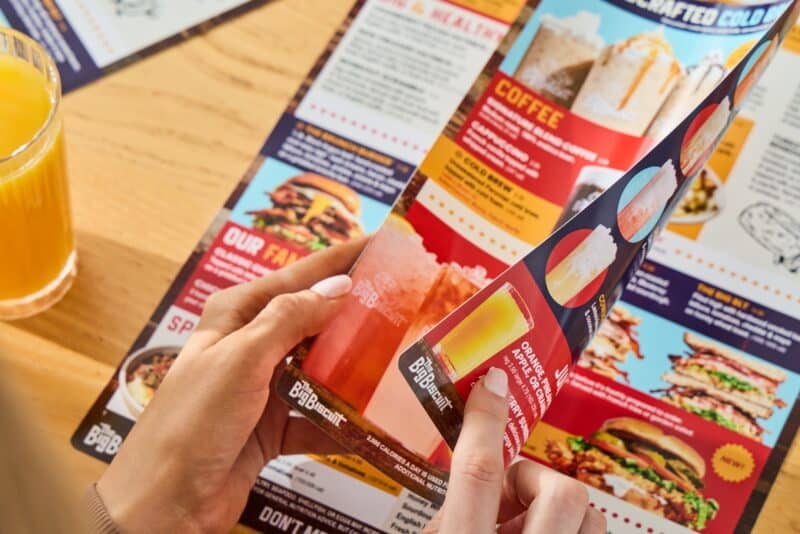
When you make the jump from a single-location to a multi-location brand, menu management software makes a difference. Instead of relying on scattered files, manual edits, and store-by-store updates, a centralized system gives your team one place to manage pricing, descriptions, modifiers, and location-specific menu versions. Trabon’s MenuNet is built for that kind of control, helping restaurant brands keep print and digital menus aligned across locations from one easy-to-use platform.
All of the versioning problems that come with manual workflows become much easier to solve once you realize you need to switch over to one true source. MenuNet helps teams maintain accurate, branded menus across locations, supports location-specific offerings and pricing, and can push approved updates across print, digital boards, and other channels more efficiently. Instead of constantly fixing mistakes after the fact, restaurants can spend more time rolling out changes with confidence and keeping the guest experience consistent.
It’s not hard to see why more restaurant brands are moving toward centralized menu management tools. When version control becomes too big for you to manage on your own, it creates confusion, wasted time, and an inconsistent guest experience. A streamlined system paves a smoother way forward.
Trabon’s MenuNet helps restaurants take control of menu updates from one true source, so teams can spend less time fixing mistakes and more time moving the brand in the right direction. If your current process is starting to get harder to manage, now is the time to schedule a consultation and see how Trabon can help.