7 Menu Printing Mistakes That Cost Restaurant Chains Time and Money
Learn More
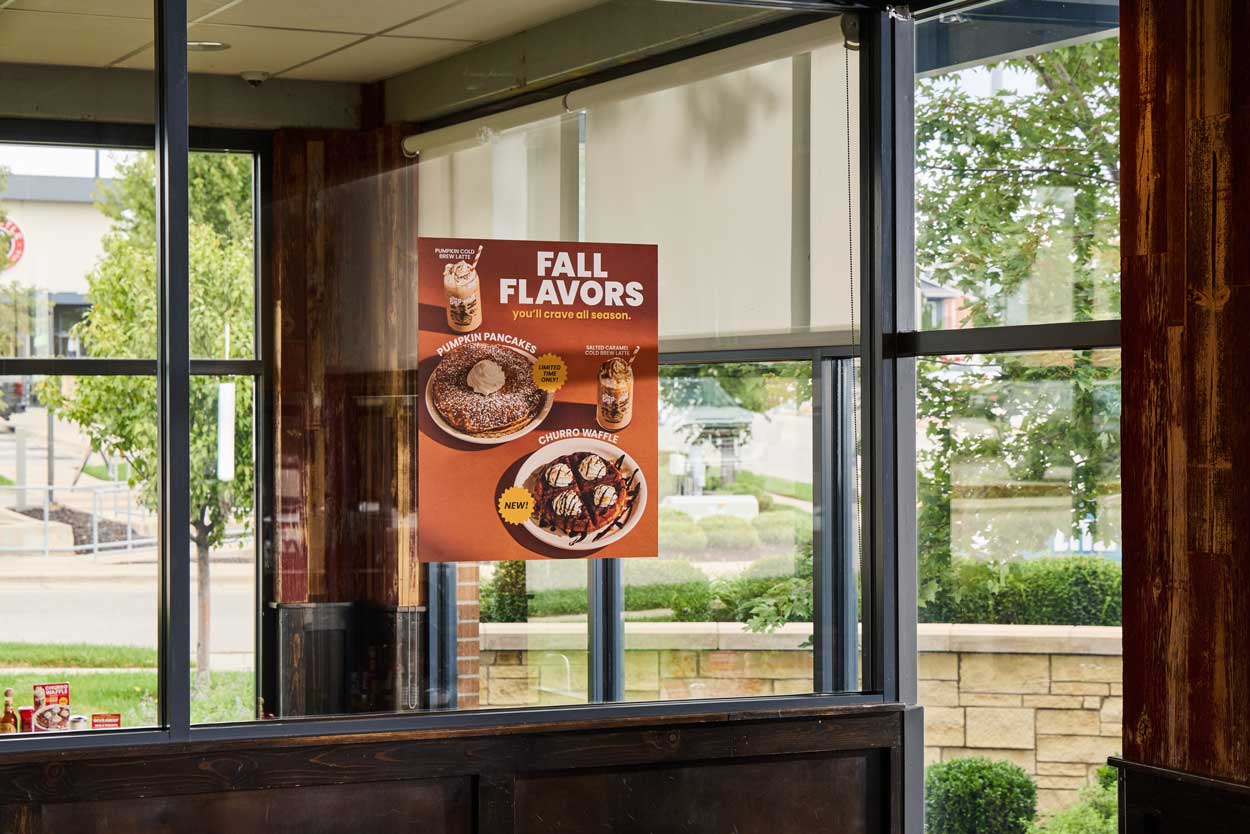
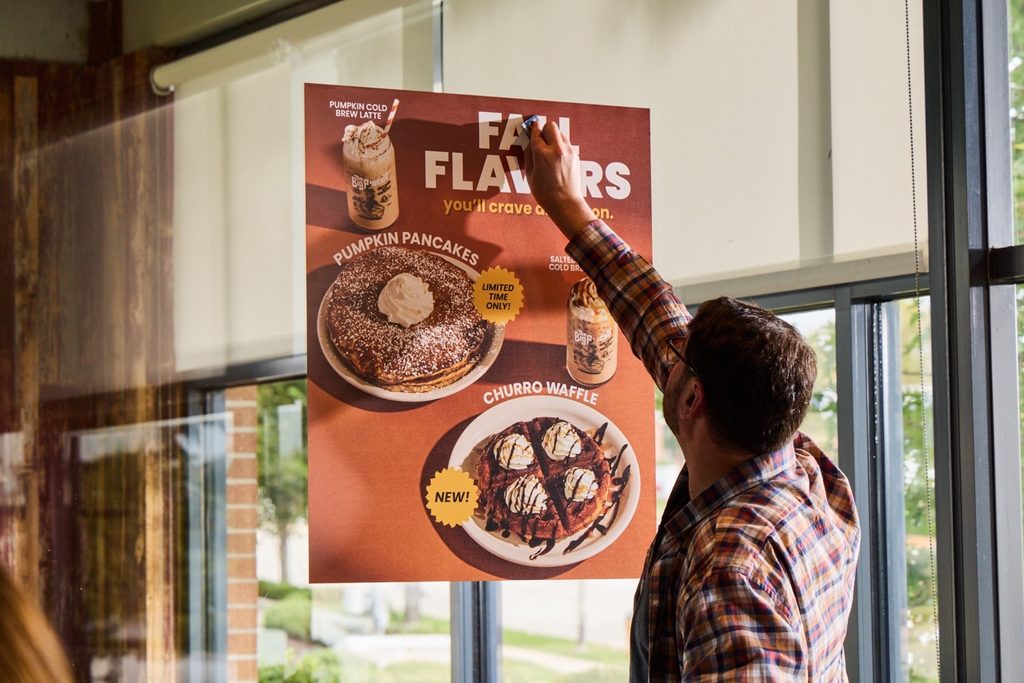
Window clings are adhesive or static-cling graphics applied to a restaurant’s exterior glass to promote a limited-time offer or a seasonal menu change. For a single location, that’s a straightforward decision. For a multi-location brand, it becomes a coordination problem: the same design has to reach every storefront, on the same timeline, without one location running an outdated promotion.
Multi-location brands coordinate window cling promotions by centralizing the design and print order through one vendor, so every location receives the same file on the same schedule instead of sourcing clings independently.
Limited-time offers have become a bigger part of restaurant marketing than they were five years ago. Technomic reported at the 2026 National Restaurant Association Show that LTOs increased 134% industry-wide over the past five years. That pace makes per-location ordering harder to sustain, if one store designs its own cling or delays an order, the promotion looks different depending on which location a guest visits.
Centralizing the order removes that risk entirely. One approved design moves through a single print run, and every location displays the same promotion on the same day, whether the brand operates ten locations or several hundred storefronts nationwide at once.
LTO campaigns need a faster turnaround because the offer has a fixed start and end date, while seasonal campaigns run longer and need materials built to hold up through weeks of sun and weather exposure.
An LTO promotion might run for two or three weeks, tied to a specific menu item. A seasonal cling, by contrast, might stay in a window through an entire summer or holiday period. That difference affects more than design, it changes what the cling needs to survive.
A seasonal cling faces more sun exposure and more handling before it comes down, so material choice becomes part of the planning conversation rather than an afterthought, especially for a brand running the same design across many storefronts all at once.
Static cling film and adhesive vinyl are the two common formats. The right choice depends on whether a cling needs to survive a few weeks or a full season without fading or lifting.
Static cling film uses static electricity rather than adhesive to stay on glass, which makes it easier to remove without residue, a common consideration for shorter LTO runs. Adhesive vinyl holds more securely over a longer period, which suits seasonal placements that need to withstand weeks of sun, rain, and temperature swings.
Size and placement matter too. A full-window design reads better from the street at a distance, while a smaller decal placed near eye level works well for secondary messaging alongside a brand’s primary promotion, without competing with it for attention. For the differences between static cling and adhesive vinyl in more depth, including reusability and how each performs across a typical promotional cycle, see our full comparison.
Removing a window cling at the end of a promotion should leave the glass clean, and most brands replace clings on the same cadence they update the menu items the clings promote.
A cling designed for its intended run length typically comes off without leaving adhesive residue behind, though how easily it releases depends on the material chosen and how long it’s been exposed to sun and heat before removal actually begins.
Most brands don’t reuse a cling once a promotion ends, since the design is tied to a specific item or date. Instead, the replacement cadence tracks the same schedule as the menu changes behind it, a new LTO or seasonal rotation means a new cling, not a recycled one.
What factors affect the cost of window cling promotions for a multi-location brand?
Cost depends on quantity, cling size, and material, adhesive vinyl for long seasonal runs typically costs more than static cling film for a short-term LTO. Ordering through one centralized print run across all locations is generally more cost-efficient than each store ordering independently.
Can individual franchise locations order window clings on their own, or does everything go through a central order?
Most multi-location brands route window cling orders through a centralized process to keep design and pricing consistent, rather than letting individual locations order on their own. Some brands allow print-on-demand reordering within an approved template, which gives locations flexibility without losing consistency.
Are window cling materials water-resistant for outdoor storefront use?
Window cling materials vary in water resistance depending on the film and adhesive used. A cling intended for a full season of exterior exposure should use a water-resistant material rated for outdoor use, not a format designed for short-term indoor display.
Window clings work best for a multi-location brand when they’re treated as part of the same coordinated system as the menu changes they promote, one approved design, one vendor, one timeline for every location.
Print Smartly. Rest Easy. Schedule a conversation to see how a national print partner keeps window cling promotions consistent across every location.
"*" indicates required fields