Custom Kitting Solutions
Read Case Study
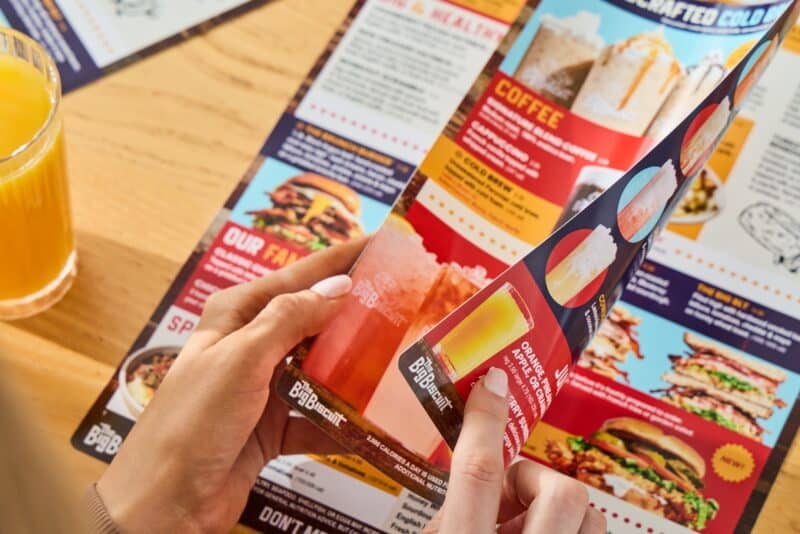
Restaurant menus rarely stay untouched for a full year because ingredient costs shift, limited-time offers come and go, and new items may earn a permanent spot after a short test. The way you print those menus has a major effect on what each change costs. For restaurants that update often, digital printing usually fits the rhythm of the business better.
The difference comes down to how digital and offset presses prepare a job.
Offset presses use custom plates made for each job. Producing those plates and setting up the press takes time before the first menu comes off the line. Once everything is running, though, the press can produce a large quantity at a very low cost per piece.
For a run of 50,000 menus, the setup cost gets spread across the entire order, so offset can be an excellent value. The same setup for 300 menus weighs heavily on the price of every copy. Large offset runs make sense when the artwork will stay current long enough to use the full quantity.
Restaurants with frequent price changes have to be more careful. Ordering a year’s supply in January also means betting that the prices and menu mix will still be right in October. Brands with different pricing at different locations face another layer of setup because each version becomes its own job.
Digital presses work directly from the artwork file, so there are no plates to make and far less setup before production begins. Short runs stay economical, and changing the file for the next run doesn’t bring another round of plate costs.
You can order around the date of the next likely update. A summer menu gets enough copies for summer, and a six-week promotion gets a six-week supply. If one location wants to test a new layout, it can order a practical quantity without committing the whole brand.
Fast digital printing services also make smaller inventories easier to manage. Locations can receive the next batch before the current supply runs out, without stockpiling months of menus that may soon be outdated.
Every menu discarded after a price or item change represents print spend that the restaurant never got to use. If a location orders twelve months of menus and replaces them after four, most of that order goes straight from storage to recycling.
Smaller, more frequent orders keep inventory closer to what the restaurant is actually serving. The goal isn’t to place an order every time someone considers a change but to match the quantity to the menu’s likely shelf life, leaving enough flexibility for the updates the team already knows are coming.
For multi-location brands, preparing that file can take longer than printing it. A single price change may have to be entered into dozens of location versions, checked by hand, and rebuilt into separate print-ready files.
MenuNet, Trabon Group’s restaurant menu management software, keeps menu items, prices, descriptions, and location versions in one system. Once the data changes, the platform can produce the right print-ready artwork for each location.
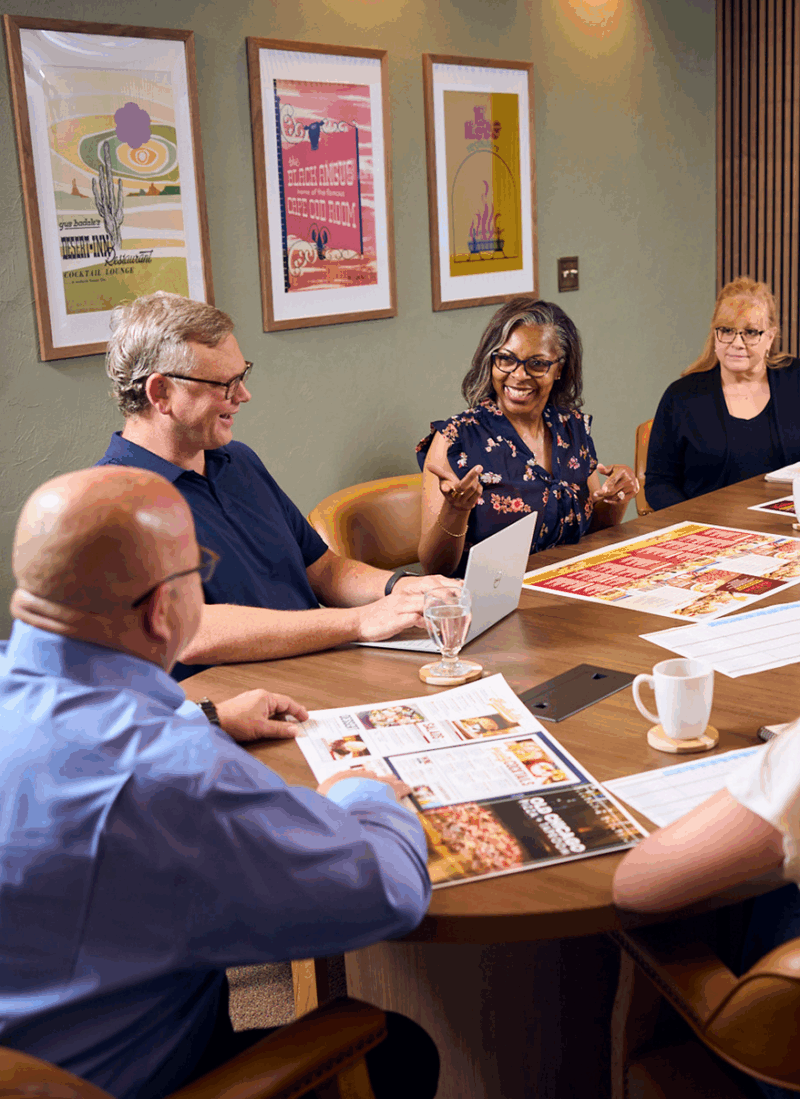
Together, restaurant menu management software and digital printing take the scramble out of a frequent update schedule. The software prepares the approved version, and the press produces the quantity each location needs now.
A new menu often comes with window clings, posters, table tents, or banners promoting the same items. Those pieces may only be useful for a few weeks, making them another poor fit for oversized orders.
Large format digital printing gives larger promotional pieces the same short-run flexibility. A test market can receive a small batch before a national rollout, and a seasonal campaign can order enough displays for its actual dates. When the promotion changes, large format digital printing makes the replacement run straightforward.
Frequent updates tend to favor digital printing, while large runs of stable menus may cost less on an offset press. Restaurant brands often need both over the course of a year. A core dine-in menu could call for offset production across hundreds of locations, while a regional price test or short promotion belongs on a digital press.
Trabon runs both types of press in our Kansas City facility, so the order can go to the equipment that suits it while keeping the same color standards. We’ve printed for restaurant brands since 1975 and now produce more than 40 million menus each year. Our digital printing services can support anything from a single-location trial to a coordinated multi-market update.
Talk to Trabon about building a print cycle around your menu calendar, or request a quote for the next update.